
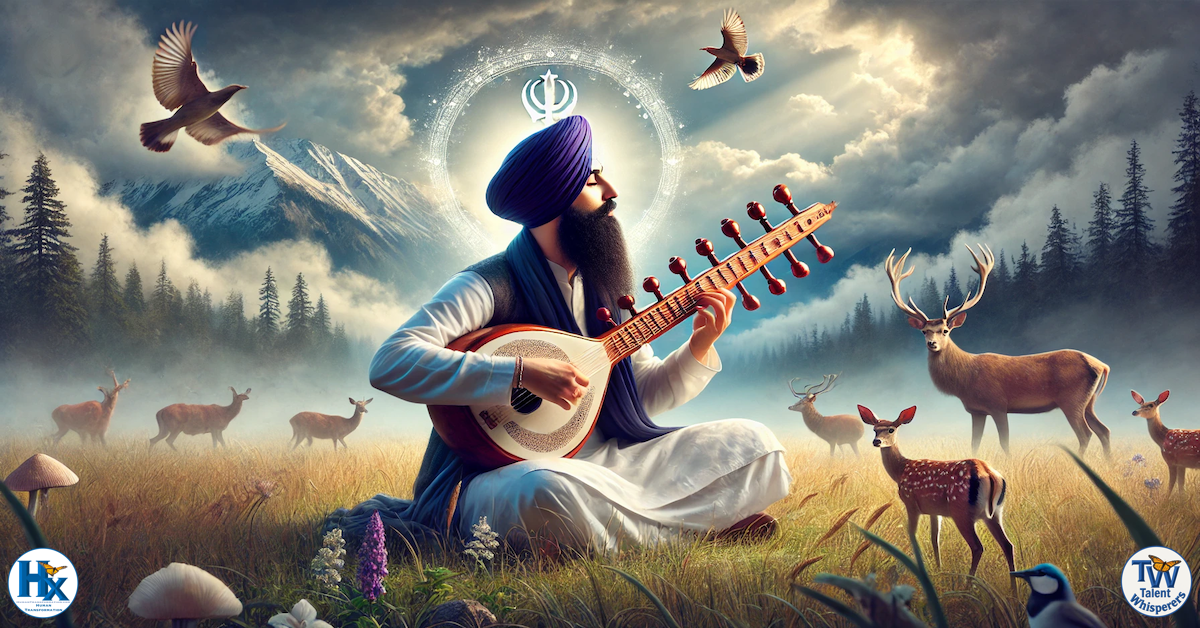
The Musician, the Song, and the Divine Rabab: A Sikh Perspective
Sikh belief offers a profound understanding of the relationship between humanity and the Divine through the metaphor of The Musician, the Song, and the Divine Rabab. Music holds a sacred place in Sikhism, with Gurbani Kirtan (devotional singing) being central to spiritual practice. This metaphor explores the interplay between the individual, the divine, and the harmony that results when one aligns with divine wisdom.
Divine Music in Sikhism: The Rabab as a Symbol of Attunement
The Rabab and Bhai Mardana: Divine Connection Through Music
The rabab holds special significance in Sikh tradition as the instrument played by Bhai Mardana, the devoted companion of Guru Nanak, the founder of Sikhism. Guru Nanak would sing divine hymns, and Bhai Mardana would accompany him on the rabab, symbolizing the inseparable relationship between divine truth and the human experience.
Much like a well-crafted rabab, each human being is an instrument shaped by the Divine. The rabab does not produce music on its own; it requires a skilled musician to bring forth its resonance. Similarly, a human being, when guided by Naam (divine presence), resonates in harmony with the shabad (divine word).
The Individual as the Rabab, The Divine as the Musician
In this metaphor:
- The individual is the rabab, created with intention and purpose.
- The Divine is the musician, guiding and playing the rabab to bring forth divine melody.
- The song is the cosmic harmony, representing the resonance of the individual when aligned with divine Hukam (divine order).
A rabab that is finely tuned creates beautiful melodies, just as a person aligned with the Guru’s wisdom (Gurmat) finds spiritual clarity and joy. However, if the strings are out of tune, the music lacks harmony—symbolizing a life disconnected from divine truth.
Naam and Resonance: The Soul’s Alignment with Divine Will
Attuning Oneself to Hukam (Divine Order)
Sikhism teaches that Naam (the Divine Name) is the essence of existence. Gurbani describes Naam as the eternal melody that pervades creation. The Guru Granth Sahib states:
“The True Lord Himself plays the melody, and He Himself sings it.” (SGGS 6)
Here, God is both the musician and the song. The individual, like the rabab, must be tuned to divine Hukam to fully participate in this divine symphony.
The Role of Shabad Guru: The Eternal Musician
Unlike traditions where a living master is necessary to play the instrument, Sikhism emphasizes the Shabad Guru (the Word as the Guru). The Guru Granth Sahib is the eternal musician, always guiding seekers toward spiritual attunement. When an individual listens deeply to Gurbani and sings Kirtan with devotion, they allow the Divine to play through them, much like Bhai Mardana’s rabab being guided by Guru Nanak’s wisdom.
Seva and Simran: Playing in Tune with the Divine Symphony
Seva (Selfless Service) as the Rhythm of Life
A musician must practice consistently to maintain the melody. Likewise, in Sikhism, Seva (selfless service) is the practice that refines the soul, keeping it in harmony with divine will. By serving others without ego, one ensures their rabab remains in tune, playing the song of compassion and righteousness.
Simran (Meditation) as the Melody of the Soul
Through Simran (remembrance of Naam), one continuously attunes themselves to the divine melody. Much like a musician must listen intently to the sounds they produce, a Sikh must engage in Simran to align with the eternal truth. The Guru Granth Sahib states:
“Meditate on the Lord’s Name, and your mind and body shall blossom forth in abundance.” (SGGS 527)
Co-Creation with the Divine: The Role of Free Will
Humans as Co-Musicians in the Divine Orchestra
Sikhism acknowledges both divine grace and human effort. While the Divine plays the rabab, humans are not passive instruments—they must actively choose to align with righteousness. Gurbani is the sheet music, guiding Sikhs on how to participate in the divine symphony.
Ego as Discord: The Danger of Being Out of Tune
Ego (Haumai) disrupts the harmony of divine music, leading to discord in life. Just as a rabab string that is too tight or too loose creates dissonance, an ego-driven life moves away from divine resonance. The Guru Granth Sahib warns:
“O Nanak, the sound current of the Naad vibrates within, but the foolish ear does not hear it.” (SGGS 921)
To hear the divine song, one must surrender ego and attune to the Guru’s wisdom.
Conclusion: The Divine Rabab and the Symphony of Life
The Sikh perspective on divine harmony can be beautifully understood through the metaphor of The Musician, the Song, and the Divine Rabab:
- The Divine is the ultimate musician, playing the eternal melody of Hukam.
- The human soul is the rabab, crafted to resonate with divine wisdom.
- Shabad Guru provides the guidance, ensuring the instrument stays in tune.
- Seva and Simran keep the strings refined, allowing one to play their role in the cosmic symphony.
When a Sikh aligns their thoughts, actions, and devotion with the divine melody, they experience Anand (bliss)—a state of spiritual fulfillment and harmony with the Creator.

See Also:
- Guru Nanak and Bhai Mardana’s Divine Music
- The Role of Kirtan in Sikh Spirituality
- Understanding Hukam in Sikh Thought
- Naam Simran and Its Transformative Power
- Guru Granth Sahib’s Teachings on Divine Music
- The Power of Simran in Sikhism
- The Influence of Music in the Guru Granth Sahib
- A Journey of Human Transformation
 Human Transformation